

Great customer service from the first interaction to the final installation.
Electrical Installation Condition Reports are a big part of what we do at A.M Electrics Devon Ltd, and they are a part of the job I genuinely enjoy.
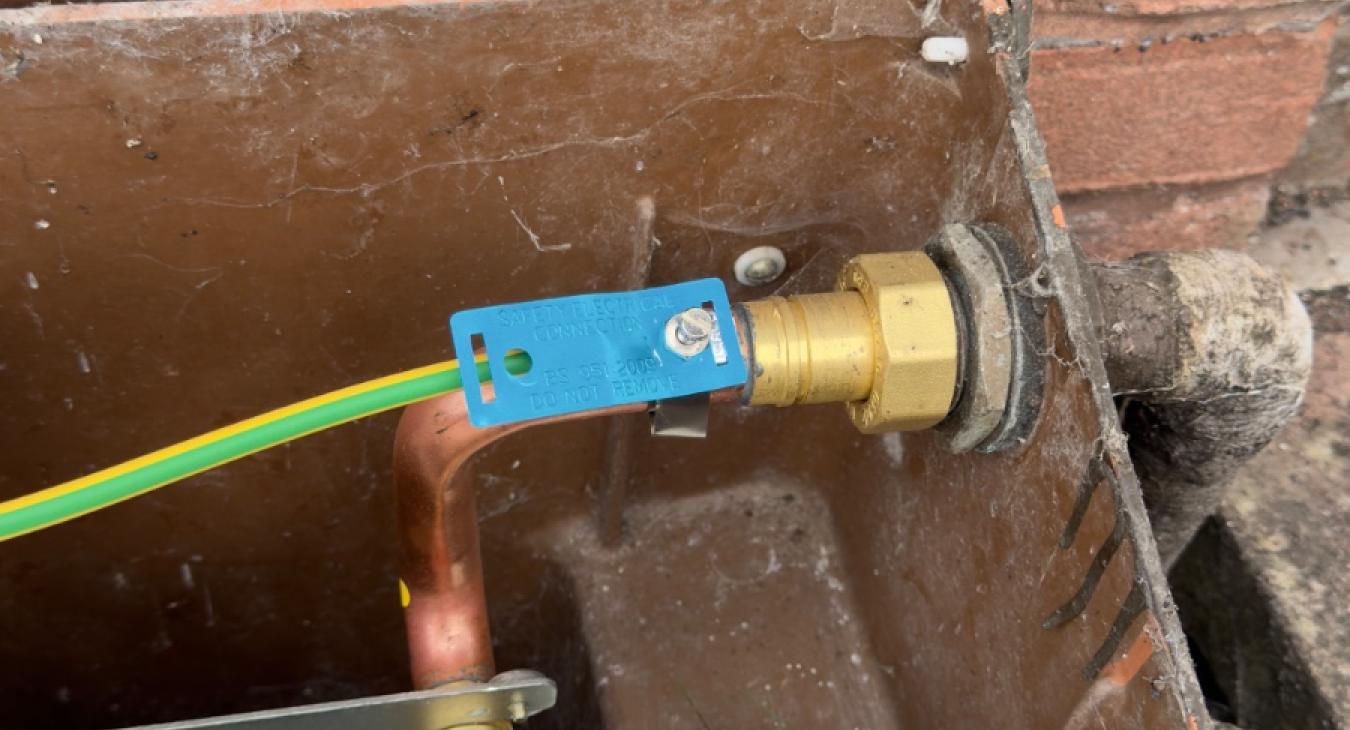
Every property is slightly different, and an EICR isn't simply about finding faults. Quite often, as with a recent EICR we carried out in Willhays Close, Kingsteignton, the electrical installation is actually in very good condition.
But that doesn't mean there won't be something worth finding.
At this particular property, the wiring and electrical installation tested very well overall. The main issue we discovered wasn't caused by damaged wiring, an old consumer unit or a faulty circuit.
It had happened because the customer's gas meter had recently been relocated outside the property, and when the gas work was completed, the existing main protective bonding connection to the gas service had been removed.
It is a great example of exactly why periodic electrical inspections are worthwhile.
EICR in Kingsteignton – Overall, a Very Good Installation
When we arrived at the property in Willhays Close, Kingsteignton, we carried out our normal Electrical Installation Condition Report.
An Electrical Installation Condition Report isn't just a quick visual inspection of the consumer unit.
We inspect and test the electrical installation, including the circuits, protective devices, earthing arrangements and main protective bonding.
In this case, the electrical installation was generally in very good condition and the test results were good.
That is always nice to see.
An EICR isn't about trying to find work that doesn't need doing. If an installation is good, we are more than happy to tell the customer that.
However, during the inspection we identified that the main protective bonding to the gas service was missing.
What Had Happened to the Gas Bonding?
Speaking with the customer helped explain why.
The gas meter had previously been located elsewhere but had recently been moved to a new position outside the property.
During those alterations, the original electrical bonding conductor had been disconnected and removed.
The gas installation may have been working perfectly well, but moving the meter had changed something that formed part of the property's electrical safety arrangements.
This is an important point because homeowners wouldn't necessarily know that.
The boiler still works.
The gas still works.
The lights work.
The sockets work.
There may be absolutely nothing obvious to suggest that an electrical safety connection has disappeared.
Unless someone checks it, it could easily remain unnoticed for years.
That is exactly the sort of thing an EICR can pick up.
Why Do We Bond a Gas Pipe?
People often call this “earthing the gas pipe”, and while that is a commonly understood way of describing it, the correct term is main protective bonding.
So why do we do it?
Metal services entering a property can, depending on their construction, introduce an electrical potential from outside the electrical installation.
The purpose of protective bonding is to connect relevant metal services to the property's main earthing terminal so that dangerous differences in voltage are reduced.
Put more simply, imagine there was an electrical fault somewhere in the property and one metal item became live.
If you were able to touch that item and another metal service at a substantially different electrical potential at the same time, there could be a risk of electric shock.
Correct protective bonding helps keep accessible metalwork at substantially the same potential, reducing the risk of a dangerous touch voltage developing.
It forms an important part of the property's overall electrical safety arrangements.
Does Every Gas Pipe Need an Earth Bond?
Not necessarily, and this is where proper inspection and testing matters.
We don't simply install a green and yellow cable onto every piece of metal pipework we see.
Main protective bonding is required where the service pipework is considered an extraneous-conductive-part, essentially meaning it is capable of introducing a potential from outside the electrical installation.
For example, where an incoming service is entirely plastic, protective bonding may not be required.
That determination needs to be made correctly rather than simply assuming that every property is exactly the same.
At the Willhays Close property in Kingsteignton, the gas service required protective bonding, and the previous connection was no longer present following the gas meter alterations.
Returning to Install the New Gas Bonding
Once the EICR had identified the missing bonding, we explained the finding to the customer and arranged to return.
On our return visit, we installed a new correctly sized main protective bonding conductor from the electrical installation's main earthing arrangement to the customer's metal gas pipework at the appropriate position near where the service enters the property.
The connection was then checked and tested to confirm the protective bonding was effective.
It wasn't a huge electrical job.
There were no walls being chased out, no consumer unit being replaced and no major rewiring required.
But it was an important job.
And without the EICR, the customer may never have known that the bonding had been removed.
Why Other Trades Can Affect Your Electrical Installation
This job also highlights something homeowners may not always consider.
Changes to other services in your home can affect the electrical installation.
Gas meters get moved.
Water mains get replaced.
Boilers get changed.
Pipework gets altered.
Extensions get built.
Kitchens and bathrooms get renovated.
During any of those jobs, existing electrical bonding or wiring can potentially be moved, disconnected or altered.
That doesn't mean another contractor has deliberately done something wrong. Sometimes older bonding is simply connected to pipework that is being removed, and unless someone identifies what the cable is for, it can disappear along with it.
Years later, everything may still appear to work normally.
An EICR gives us an opportunity to look at the installation as it stands today, rather than assuming that because something was correct ten years ago it must still be correct now.
Good EICRs Aren't About Creating Unnecessary Work
This is something I feel quite strongly about.
The purpose of an EICR should be to give the customer an honest assessment of their electrical installation.
At this Kingsteignton property, most of the report was good news.
The wiring was in good condition.
The test results were good.
We didn't produce a huge list of unnecessary electrical upgrades.
We found one important issue relating to the gas bonding, explained why it mattered and returned to put it right.
That is exactly how an EICR should work.
Looking for an EICR in Kingsteignton?
If you are unsure when the electrical installation in your home was last properly inspected, an EICR can give you a much better understanding of its condition.
It can also uncover alterations that may have happened over the years without you realising they affected the electrical safety of the property.
A.M Electrics Devon Ltd regularly carries out EICRs for homeowners, landlords and property buyers throughout Kingsteignton.
If you're looking for a reliable electrician in Kingsteignton to inspect your property, get in touch with A.M Electrics Devon Ltd on 01626 299105 to arrange an Electrical Installation Condition Report.