

Needed a EV charger and consumer unit installing and certifying etc that I supplied.
We recently installed a new Anker battery storage system at a property in Barons Pyke, Ivybridge, connecting it directly to the consumer unit so it could supply up to 2.5 kW of power back into the home.
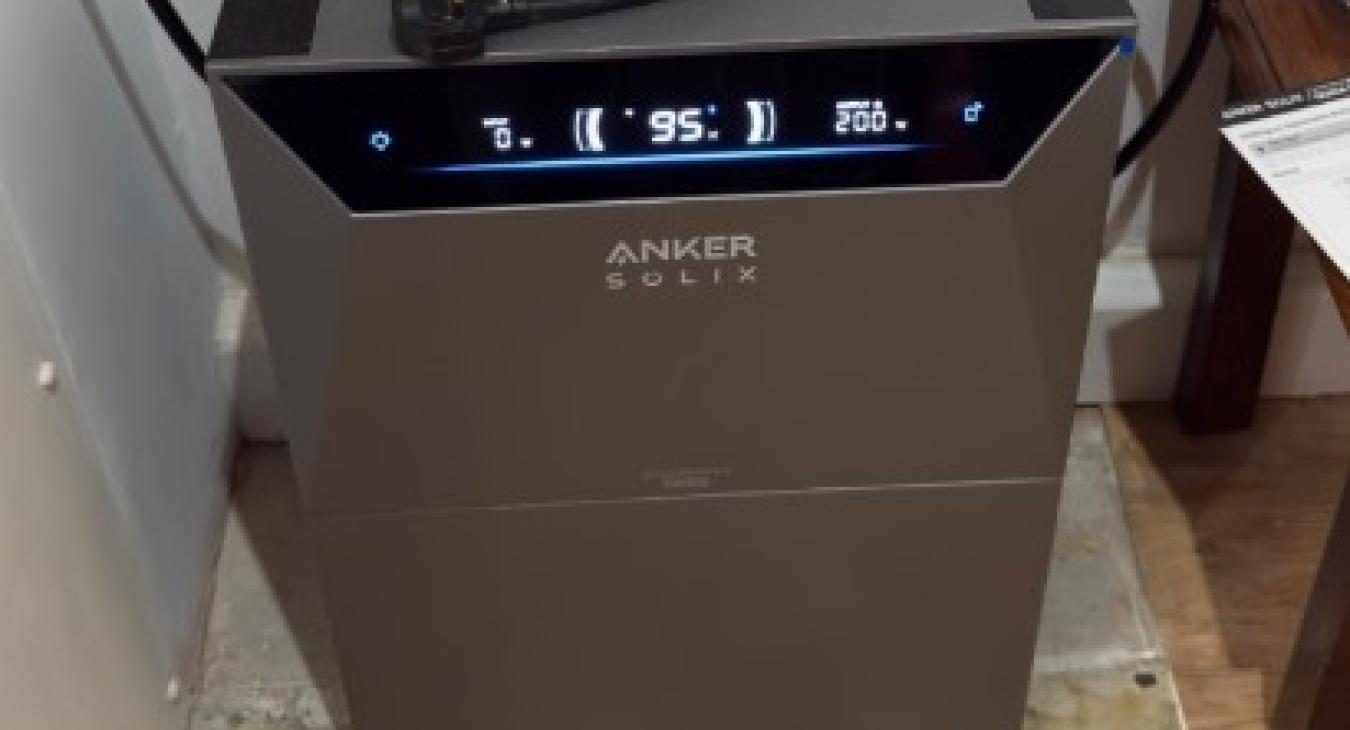
For the customer, the benefit is being able to store electricity and use it when it is more useful or potentially more expensive to buy from the grid. With the right electricity tariff and settings, home battery storage can help reduce the cost of running everyday appliances.
However, getting the most from a battery involves more than choosing the equipment. The installation, available output, charging schedule and household electricity use all matter.
Installing the Anker Battery at Barons Pyke, Ivybridge
For this installation, we connected the Anker battery to the property’s consumer unit through a dedicated electrical circuit.
This allows the battery to contribute power to the household electrical installation, with a maximum output of 2.5 kW, equivalent to 2,500 watts.
Rather than supplying just one appliance, the stored electricity can help meet the combined demand from appliances operating around the home. That might include the fridge freezer, television, lighting, internet router and other everyday equipment.
The amount supplied at any moment depends on the household demand, the battery’s settings and how much charge remains available.
For anyone considering Anker SOLIX battery storage installation, understanding how the system will work in their own property is an important part of planning the job.
What Does a 2.5 kW Battery Output Mean?
The 2.5 kW figure describes the maximum power the battery can supply at one time. It does not describe how much electricity it stores.
A useful comparison is the difference between the size of a water tank and how quickly water can flow out of it. Battery capacity, measured in kilowatt-hours, or kWh, tells you how much energy is stored. Output, measured in kilowatts, or kW, tells you how quickly that energy can be delivered.
For example, if the home is using 1 kW, the battery may be able to cover that demand while sufficient charge is available.
If household demand rises above its 2.5 kW output, the grid supplies the additional electricity required during normal operation. Switching on several powerful appliances together can therefore still result in electricity being imported.
This makes battery storage particularly useful for covering sustained everyday demand, rather than expecting one battery to run every high-powered appliance simultaneously.
Charging at a Cheaper Rate and Using Electricity Later
One of the main benefits of home battery storage is the opportunity to move electricity purchases to a cheaper time of day.
With a suitable time-of-use tariff, the battery can be scheduled to charge during lower-priced periods. That stored energy can then be used later, reducing the amount of electricity purchased at the more expensive rate.
For an Ivybridge household using electricity during the afternoon and evening, this could help cover cooking-related background demand, lighting, entertainment and other daily activities.
The saving depends on the difference between the charging rate and the electricity price being avoided. Charging losses, battery settings and the amount of stored energy actually used also affect the result.
A battery does not automatically make electricity cheaper on a flat-rate tariff. Choosing a suitable tariff and charging schedule is central to making the system worthwhile.
Do You Need Solar Panels for Home Battery Storage?
Solar panels are not essential for a battery system designed to charge from the grid.
That means homeowners can consider battery storage even if their roof is unsuitable for solar panels or they are not ready to install them.
Where a compatible solar installation is available, battery storage can offer another benefit: keeping some surplus daytime generation for use later. Instead of exporting all the unused solar electricity, some can be stored for the evening.
Whether this is financially beneficial depends on the import tariff, export payments, system compatibility and household usage. The best arrangement should be based on the property rather than a headline savings claim.
Why the Electrical Installation Matters
Connecting a battery to the consumer unit requires proper planning, suitable circuit protection and the checks appropriate to the equipment and existing installation.
The consumer unit, earthing arrangements, cable route and manufacturer’s requirements all need consideration. Inspection, testing, commissioning and the applicable certification and network notification requirements also form part of a properly completed installation.
Simply connecting a battery does not guarantee that it is correctly configured to deliver its intended output.
It is also important to distinguish everyday battery operation from emergency backup. Supplying electricity into the home while the grid is available does not automatically mean the whole property will remain powered during a power cut. Backup operation depends on the specific equipment and installation arrangements.
The Benefit for This Ivybridge Customer
The installation at Barons Pyke gives the customer an Anker battery connected directly to the household electrical installation, capable of contributing up to 2.5 kW during normal operation.
The practical benefit is greater control over when electricity is purchased and when that stored energy is used. With a suitable tariff and charging schedule, the customer can reduce their reliance on higher-priced grid electricity while the battery has charge available.
Actual savings will become clearer through use and monitoring. We would rather explain those factors honestly than promise a fixed reduction without knowing how a household uses electricity.
Looking for a Battery Storage Installer in Ivybridge?
If you are considering an Anker battery and want to understand the installation requirements, available output and potential benefits, A.M Electrics Devon Ltd can help.
As your local electrician in Ivybridge, I can assess your existing electrical installation and discuss how battery storage could fit your home.
Call 01626 299105 to discuss your installation.